CEO, WaterStep
"Paul helped our team get aligned. Now we are executing on one of the most important initiatives in our company's history."
— Mark Hogg

In one session, your team goes from scattered to synchronized.

When everyone sees the same picture, your whole team pulls in the same direction from day one.

Book a Clarity Call

This is a diagnostic conversation, not a sales call.
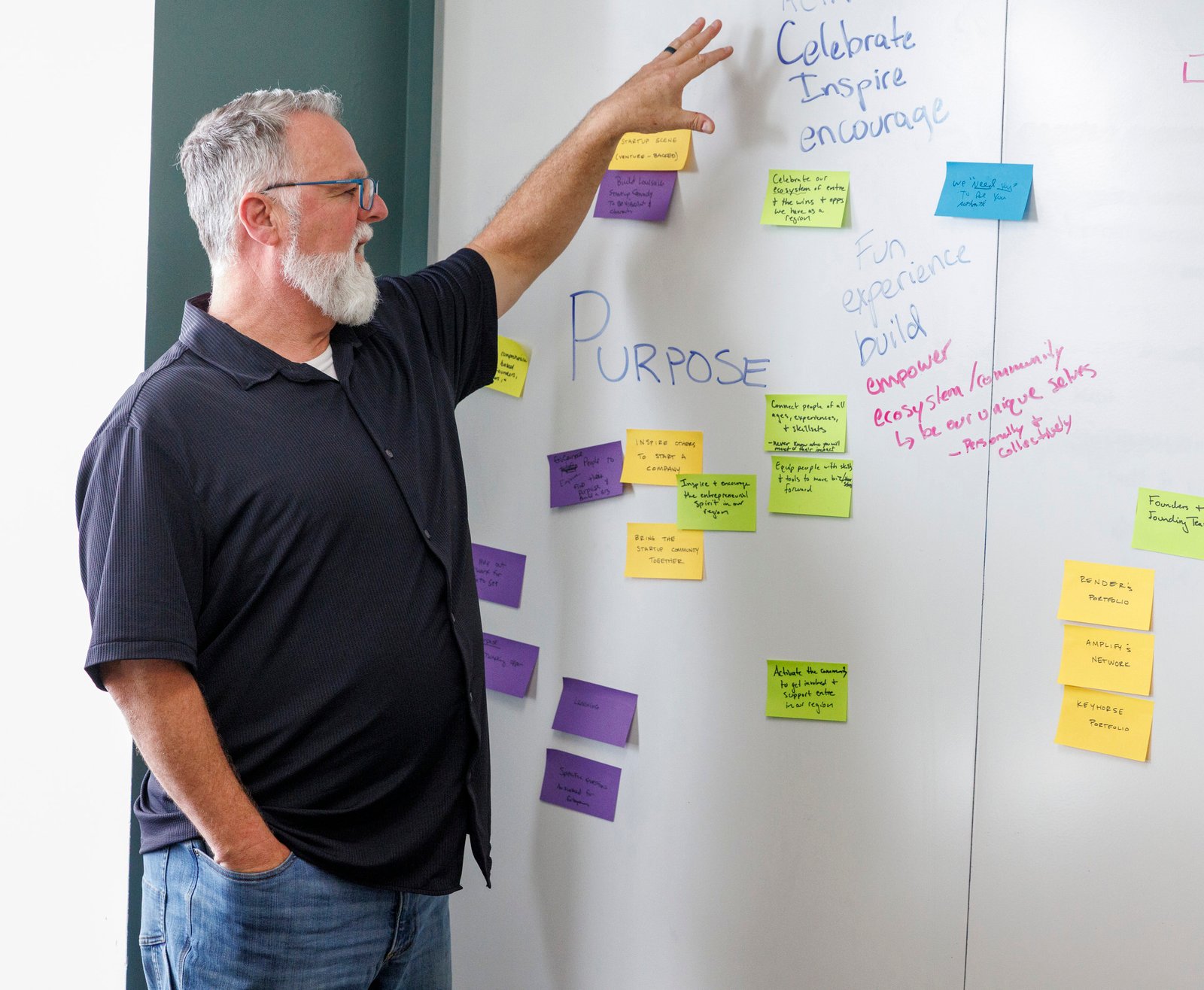
Paul at whiteboard with sticky notes

Everyone in the room thinks everyone else understands. Nobody does.

A team is building something genuinely complex. The people in the room are smart. They care. And they're all moving fast enough that nobody stops to ask whether everyone is actually seeing the same thing.

Sometimes it's because each person assumes the others have it figured out. They expect to catch up. So they keep moving.

Sometimes it goes deeper than that. The assumption is so embedded nobody even knows to check. Engineering has a piece. Marketing has a piece. Sales has a piece. Leadership has a piece. Each one is real. None of them are the same. And nobody realizes that until it's expensive to fix.

Beginning

Assumed Alignment

Everyone thinks everyone else sees what they see. No one checks. The foundation is already cracked before the first deliverable is built.

During

The Momentum Trap

Moving fast makes it socially impossible to stop and ask if everyone actually agrees. Every decision made on top of a misunderstood foundation makes it harder to correct. Misalignment compounds in silence.

End

The Silence Tax

The bill arrives. Rework. A sales cycle that won't close. Messaging that almost lands but doesn't. The cost of everything that didn't get said early enough to fix cheaply.

I pull the idea out of the fragments it's living in.

Not a workshop. Not a branding exercise. A working session - where the real problem gets named, the mechanism gets surfaced, and a shared picture gets built that nobody had before.

Most teams aren't misaligned because they disagree. They're misaligned because the full picture has never existed anywhere outside of individual heads. Engineering has a piece. Marketing has a piece. Leadership has a piece. Nobody has all of it at once.

It starts with a conversation. Not a brief. Not a scope of work. I come prepared. You talk. I listen, ask, push back, and build the picture live. Most people describe the session as the first time someone has actually heard the whole thing at once.

After that, I go away and synthesize everything. What comes back is the Clarity Report - a visual document that makes the invisible visible. Built to present in the room and leave behind for the people who weren't there.

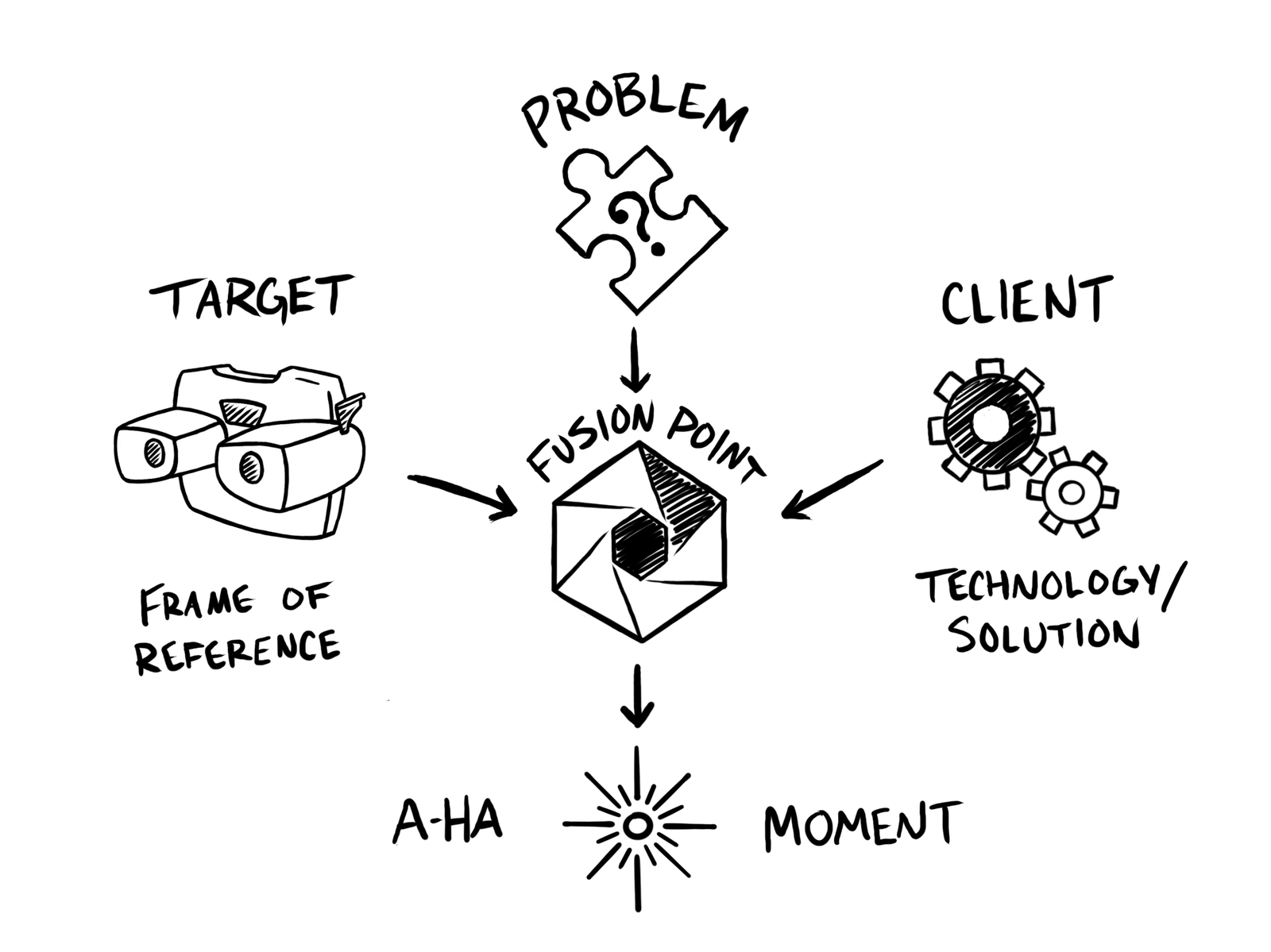
Fusion Point diagram - Problem, Target, Client, and Technology converging at the Fusion Point to create an A-Ha Moment

Pre-session questionnaire. A working session. A Clarity Report. That's the engagement.

Does this sound like your room?

Four situations. The same problem, four different worlds.

Complex Product Launch

The engineer who didn't want to be on the call.

Marketing had been building launch materials for months. Engineering had been too busy to be in the same room. What almost shipped would have looked good. It just wouldn't have explained the right thing. One session changed the launch.

Multi-Stakeholder Initiative

Nobody knew what it was, including the people building it.

The program had a name, a proposal, and real momentum. What it didn't have was a shared picture. Not even the person driving it could fully define what it was. We built Shared Zero in the room. Live. With the people who had never seen the same thing at the same time.

Visionary Founder

The founder whose idea nobody could keep up with.

He could see exactly where it was going. The people around him couldn't keep up. Not because the idea was wrong - because it had never existed in a form they could hold. Once it did, everything moved differently.

High Performance Team

A team that was moving fast and quietly knew something was off.

Smart people. Good intentions. Real momentum. And underneath it, a crack nobody had named - because naming it felt like pulling the emergency brake. Sometimes pulling the brake is the right move. Just do it before the launch, not after.

The best time to surface misalignment is before it costs anything.

The second best time is now.

If any part of this felt familiar, let's talk.